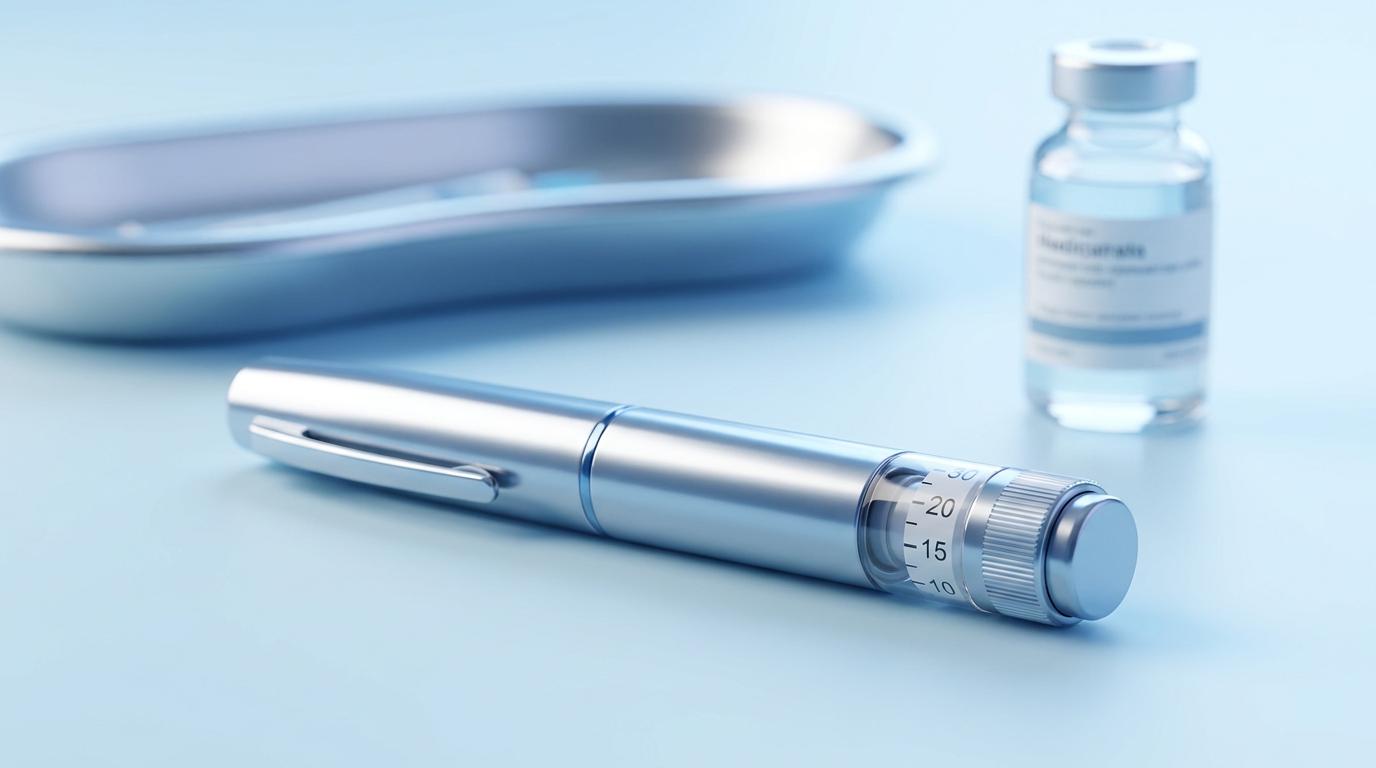
Common Measurement and Administration Mistakes Involving Ozempic Pen Dose Count

The frequent error is assuming every pen holds the same number of injections. It does not. The dose count depends on which of three multi-dose presentations was dispensed and which milligram amount was prescribed, and the prescribing information rules out working any of it out by ear. Most administration problems begin with that assumption.
What a dose count means on this device
Semaglutide injection is supplied several ways, and they behave differently. The DailyMed labeling lists three single-patient-use multi-dose pens. The 2 mg/3 mL presentation holds either four 0.25 mg doses and two 0.5 mg doses, or four 0.5 mg doses. The 4 mg/3 mL presentation holds four 1 mg doses. The 8 mg/3 mL presentation holds four 2 mg doses. Separately, single-dose prefilled syringes exist at 0.25 mg, 0.5 mg, and 1 mg per 0.5 mL, with no selector and nothing to count.
The same 2 mg/3 mL cartridge yields a different injection total depending on the prescribed amount. A person who tallied four injections on their first pen and expects four on the next has made a reasonable guess about the wrong object.
The shortcut the labeling closes off
The instructions for use are blunt about the sound the device makes. The text directs the user to always read the dose counter and the dose pointer to see how many milligrams have been selected, and then states: Do not set the dose by counting the number of clicks you hear. A later passage adds that the selector clicks differently when turned forward than when turned backward, and repeats the instruction not to count them at all.
Any scheme built on tallying sounds assumes each sound represents an equal increment in both directions. The manufacturer states in its own labeling that it does not. There is a flat prohibition elsewhere in the same document too: never use a syringe to withdraw the medication from the pen.
Why a pen can end before its dose count does
Two labeled details account for most missing-dose complaints. After first use, a pen can be kept for 56 days at controlled room temperature or refrigerated, and that clock runs whether or not doses remain. A pen used irregularly can reach its in-use limit with product still visible in the window.
Second, the counter is a contents gauge as well as a dose selector. The labeling explains that when the pen holds less than a full dose, the counter stops before that number appears, and instructs the user to open a new pen rather than inject the remainder. Turning the selector until it stops is presented as the way to check what is left, not as a way to find a smaller dose.
| What the user is tracking | What the device is doing | What the labeling directs |
|---|---|---|
| Sounds while dialing | Producing uneven feedback that differs by direction | Do not count the pen clicks; read the counter and pointer |
| Injections per carton | Delivering only the totals fixed by that presentation and dose | Only the listed doses can be selected on each pen |
| Visible liquid remaining | Holding residual volume that is not a full dose | If not enough is left for a full dose, use a new pen |
| Getting the last of it out | Bypassing the metering mechanism entirely | Never use a syringe to withdraw from the pen |
| Days of product left in the window | Running an in-use clock independent of contents | Store the pen for 56 days after first use |
The priming step people skip and then miss
Before the first injection from each new pen, and only then, the instructions call for a flow check: dial to the flow check symbol, hold the pen needle up, press until the counter returns to zero, and confirm a drop appears. If none does, the step is repeated, then the needle is changed and repeated once more. The labeling warns that if no drop appears, nothing is being injected even though the counter still moves.
Someone who has never seen that instruction can complete the full sequence, watch the numbers change, and receive nothing at all.
These errors are documented, not hypothetical
A case series in the Journal of the American Pharmacists Association described administration errors involving compounded semaglutide reported to a poison control center, with dose confusion at the center of the reports. The wider device literature says the same about pens generally: a study of patient perceptions of insulin injection devices found handling problems are common and often unreported, and a case in a senior care journal traced repeated pen failures in an older patient to steps that looked simple on paper.
The pattern is people converting between two systems that were never designed to convert. A market surveillance study of semaglutide sold online without a prescription found quality and labeling problems in that channel too, so the container itself is sometimes the variable.
How openly a seller states which presentation ships also varies by where the prescription is written. Manufacturer routes like LillyDirect and NovoCare Pharmacy name the branded device directly, and some telehealth providers publish their terms in the same spirit: HealthRX sets out its Ozempic options on a product page, whereas programs such as Ro, Hims & Hers, and Henry Meds often disclose the exact carton and count only after an intake. Knowing that up front is what lets a buyer predict the dose count before the box arrives.
What arrives in the box decides which errors are possible
Any of this only applies if a pen is what gets dispensed. Manufacturer-affiliated channels such as NovoCare Pharmacy and LillyDirect ship the branded device with its own instructions for use, so the metering is handled by the pen. Telehealth programs vary a great deal: Ro, Hims & Hers, LifeMD, Noom, and FormBlends each set their own mix of branded and compounded products at their own cash prices, and a vial with a separate syringe carries a different error profile from a dial-a-dose pen at a similar monthly figure.
Worth asking before paying, next to the price: what physically arrives, in what container, and whose written instructions come with it.
A compounded vial has no dose count to read
Compounded semaglutide is not FDA-approved. Its concentration is set by the compounding pharmacy rather than fixed by an agency-reviewed label, and FDA has warned about unapproved versions of these drugs marketed for weight loss, including preparations using salt forms such as semaglutide sodium and semaglutide acetate that are not the same active ingredient as the approved product. A vial has no selector, no counter, and no printed dose total, so nothing from a branded carton transfers to it.
Frequently asked questions
Why did a new pen give fewer injections than the last one?
Most often because the prescribed amount changed or the presentation did. The 2 mg/3 mL pen yields four injections at 0.25 mg but only two at 0.5 mg when supplied for that sequence. Checking the carton strength against the prescribed milligram amount usually explains the gap without any device fault.
There is clearly liquid left. Is it wasted?
Residual volume is expected and is not a shortfall. The counter stopping short means less than a full dose remains, and the labeling says to start a new pen rather than inject what is there. Drawing it out with a syringe is specifically prohibited in the instructions for use.
Is Ozempic the same product as Wegovy?
No. Ozempic is the semaglutide product approved for glycemic control in adults with type 2 diabetes, with further approved uses for cardiovascular event risk and kidney outcomes in that population. Wegovy is the semaglutide product approved for chronic weight management. Different labels, different dose steps, different presentations.
Does a pen in use need refrigeration?
The labeling allows a pen in use to be kept at controlled room temperature or refrigerated for up to 56 days, protected from heat and light, with the cap on and no needle attached. Unopened pens stay refrigerated until the expiration date. That in-use window is a hard stop regardless of contents.
Are there warnings that apply no matter how careful the technique is?
Yes. Semaglutide carries a boxed warning about thyroid C-cell tumors seen in rodents and is contraindicated in anyone with a personal or family history of medullary thyroid carcinoma or with multiple endocrine neoplasia syndrome type 2. That screening belongs before a first injection, not after a dosing question.