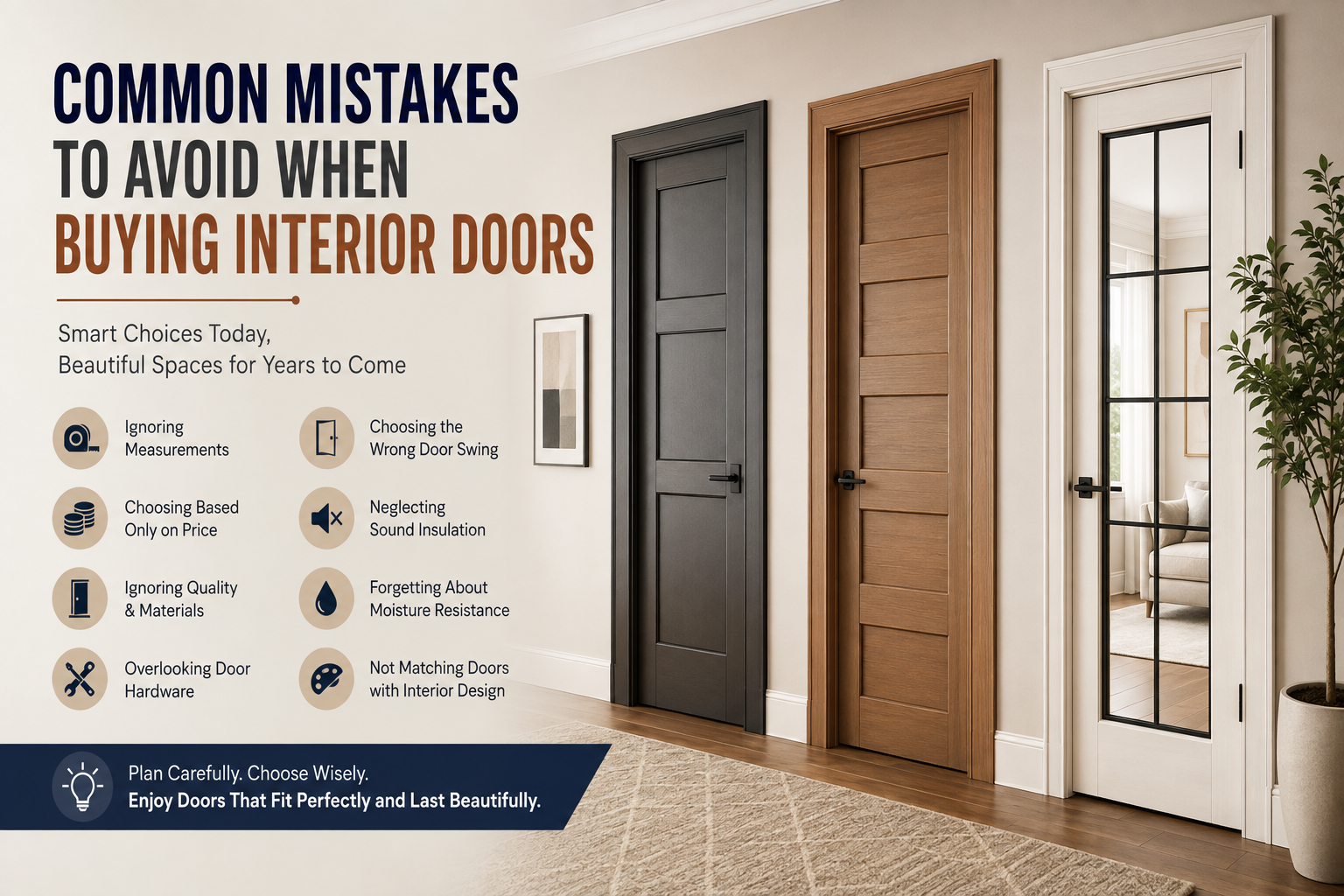
Common Mistakes to Avoid When Buying Interior Doors

Choosing the right interior doors is an important part of creating a comfortable, functional, and visually appealing home. While many homeowners focus on flooring, wall colors, and furniture, doors play an equally significant role in defining the style and practicality of every room. A carefully selected interior door enhances privacy, improves sound insulation, and complements the overall interior design.
However, buying doors is not always as straightforward as it seems. Many people make purchasing decisions based solely on appearance or price, only to realize later that the doors do not fit properly, match the home’s style, or perform as expected. Understanding the most common mistakes before making a purchase can save both time and money while helping you choose products that provide long-term value.
This guide highlights the biggest mistakes homeowners should avoid when shopping for interior doors for homes and offers practical tips for making smarter buying decisions.
Ignoring the Purpose of Each Room
One of the biggest mistakes buyers make is selecting the same type of door for every room. Different spaces have different functional requirements.
For example, a bathroom requires more moisture-resistant materials than a bedroom. A home office benefits from better sound insulation, while closets may only require lightweight solutions.
Before selecting an interior door, consider:
- Privacy requirements
- Moisture exposure
- Noise reduction
- Available space
- Daily usage frequency
Choosing interior doors for houses according to room function ensures better comfort and longer-lasting performance.
See also: The Advantages of Professional Smart Home Automation Solutions
Choosing Style Over Functionality
Beautiful doors certainly improve the appearance of a home, but appearance should never be the only deciding factor.
Many homeowners purchase decorative glass doors without considering privacy needs or select heavy solid wood models for areas where lightweight alternatives would be more practical.
A good purchase balances both design and everyday usability. The best interior house doors combine attractive finishes with dependable performance, making them suitable for years of daily use.
Forgetting to Measure Correctly
Incorrect measurements are responsible for countless installation problems.
Many buyers assume all doors are standard sizes, but older homes and custom-built properties often have unique dimensions. Ordering the wrong size can delay renovations and increase installation costs.
Always measure:
- Door width
- Door height
- Wall thickness
- Frame dimensions
- Swing direction
Even when browsing interior doors for sale, accurate measurements should come before selecting designs or finishes.
Buying Based Only on Price
Everyone appreciates saving money, but choosing the cheapest option often leads to disappointment.
Lower-priced doors may use lower-quality materials that warp, dent, or wear out more quickly. Replacing an inexpensive door after only a few years can cost more than investing in better quality from the beginning.
Instead of focusing only on purchase price, evaluate:
- Material quality
- Durability
- Warranty
- Maintenance requirements
- Expected lifespan
Finding good value means balancing affordability with long-term performance.
Overlooking Door Materials
Different materials offer different benefits, yet many buyers overlook these differences.
Some of the most common options include:
- Solid wood for durability and timeless appeal
- MDF for affordability and painted finishes
- Glass for modern aesthetics
- Solid core doors for improved sound reduction
- Hollow core doors for budget-conscious projects
Understanding these materials helps homeowners choose interior doors for homes that match both their lifestyle and budget.
Not Matching Doors with Interior Design
Doors should complement the rest of the home’s design rather than compete with it.
For example, sleek minimalist doors may look out of place in a traditional farmhouse, while heavily carved doors may overwhelm a modern apartment.
When choosing doors interior, consider:
- Flooring colors
- Wall finishes
- Trim style
- Furniture
- Architectural theme
Creating consistency throughout the house makes every room feel more connected.
Ignoring Door Hardware Quality
Many buyers spend significant money on doors while overlooking hinges, handles, and locks.
Poor-quality hardware can wear out long before the door itself, creating squeaks, loose handles, and operational problems.
Look for hardware that offers:
- Smooth operation
- Durable finishes
- Corrosion resistance
- Easy maintenance
- Reliable construction
Quality hardware contributes just as much to the user experience as the door itself.
Choosing the Wrong Door Swing
Door swing direction affects room functionality more than many people realize.
A poorly positioned door may block furniture, interfere with walkways, or reduce usable floor space.
Before ordering an interior door for houses, consider:
- Traffic flow
- Furniture placement
- Nearby windows
- Light switches
- Accessibility
Taking a few extra minutes to evaluate door movement can prevent future inconvenience.
Neglecting Sound Insulation
Noise control is especially important in bedrooms, offices, and study areas.
Many homeowners discover too late that hollow-core doors allow conversations, television noise, and household activity to travel easily between rooms.
If privacy is important, consider solid-core or high end interior doors designed to reduce sound transmission while maintaining attractive aesthetics.
Forgetting About Moisture Resistance
Bathrooms, laundry rooms, and certain basement areas experience higher humidity levels than other parts of the home.
Choosing the wrong material in these locations may result in:
- Warping
- Swelling
- Surface damage
- Reduced lifespan
Selecting moisture-resistant materials helps interior doors remain attractive and functional for many years.
Focusing Only on Current Trends
Trendy designs can be exciting, but trends often change quickly.
Buying doors based only on current fashion may leave your home looking dated within a few years.
Instead, choose timeless styles that continue looking elegant even as decorating preferences evolve. Classic panel designs, neutral finishes, and balanced proportions usually provide the greatest long-term satisfaction.
Ignoring Maintenance Requirements
Every material requires a different level of care.
Before purchasing, ask yourself:
- Will the finish require refinishing?
- Does the material scratch easily?
- Can it be cleaned with standard household products?
- Is repainting simple?
Busy households often benefit from low-maintenance materials that continue looking fresh with minimal effort.
Not Considering Natural Light
Many homeowners unintentionally make their interiors feel darker by choosing completely solid doors throughout the home.
Glass panel doors can increase natural light between rooms while maintaining an open atmosphere.
Depending on privacy needs, options include:
- Frosted glass
- Decorative glass
- Clear glass
- Partial glass inserts
Strategic use of glass creates brighter and more inviting living spaces.
Purchasing Without Comparing Options
Buying the first product that looks attractive often results in missed opportunities.
Before making a decision, compare several options based on:
- Construction quality
- Material
- Finish
- Warranty
- Customer reviews
- Installation requirements
Taking time to compare different interior doors allows homeowners to make informed decisions rather than impulsive purchases.
Assuming Every Expensive Door Is Better
While premium products often offer better craftsmanship, price alone does not guarantee superior quality.
Some expensive products simply reflect designer branding or decorative features that may not provide additional practical value.
Instead of assuming the highest price equals the best choice, carefully evaluate construction methods, material quality, and overall durability.
Forgetting Future Needs
Many homeowners buy doors based only on their current lifestyle.
However, future needs may include:
- Growing families
- Aging household members
- Home offices
- Accessibility improvements
- Renovations
Planning ahead makes it easier to select interior door for homes that continue meeting household needs for years.
Overlooking Energy and Climate Considerations
Although exterior doors receive most attention regarding insulation, indoor climate can also influence interior door selection.
Rooms with significant temperature or humidity differences benefit from stable materials that resist expansion and contraction.
Quality manufacturing helps reduce problems associated with seasonal environmental changes.
Skipping Professional Installation Advice
Some homeowners attempt installation without understanding framing, leveling, or hardware alignment.
Improper installation may cause:
- Doors that stick
- Uneven gaps
- Difficulty closing
- Premature wear
- Damaged hardware
Even experienced DIY enthusiasts should seek professional guidance when installing custom-sized or heavier doors.
Making the Right Choice for Lasting Satisfaction
Buying interior doors is an investment that affects both the appearance and functionality of your home every day. Avoiding common mistakes such as ignoring measurements, selecting unsuitable materials, overlooking hardware quality, or choosing purely based on price can make a significant difference in the final result.
Whether you are upgrading a single room or furnishing an entire house, taking time to compare materials, evaluate room requirements, and think about long-term durability leads to smarter purchasing decisions. Well-chosen interior doors not only enhance beauty but also improve comfort, privacy, and daily convenience. By approaching the buying process carefully and thoughtfully, homeowners can enjoy stylish, dependable doors that continue adding value to their living spaces for many years.