Emergency Furnace Repair: Fast, Expert Service to Restore Heat Safely

When your furnace quits on a cold night, act quickly to protect your home and family. You can often limit damage and restore heat faster by spotting key warning signs early and calling a qualified emergency HVAC pro who offers 24/7 service.
This post Emergency Furnace Repair explains what those warning signs look like, how emergency technicians diagnose and prioritize repairs, and what you should expect during a fast-response service visit so you can make confident decisions when every minute counts.
You’ll learn practical steps to take immediately, what questions to ask the technician, and how emergency repairs differ from routine service so you won’t be surprised when help arrives.
Common Signs of Furnace Failure
You’ll notice problems through sounds, smells, and the way warm air moves through your home. Pay attention to repeating patterns, sudden changes, and any safety-related alerts.
Unusual Noises and Odors
Rattling, banging, or grinding often means loose or failing mechanical parts—blowers, belts, or motor bearings. If the noise starts suddenly after a startup or increases with run time, shut the system off and call a technician to avoid further damage.
A persistent metallic squeal usually indicates a worn belt or failing bearing. Clicking that continues beyond ignition can signal electrical issues or a failing ignition system; these can be fire risks and require immediate inspection.
Sharp, hot electrical smells or the smell of burning insulation are red flags. A faint, musty or mildew odor points to clogged condensate lines or trapped moisture in ducts, which affects air quality but is less immediately dangerous than electrical burning or gas smells.
Inconsistent Heating or Airflow
Spotty temperatures from room to room or frequent swings in thermostat setpoint suggest airflow problems or a failing blower motor. Start by checking and replacing a dirty filter; if problems persist, the motor, duct leaks, or a failing control board may be responsible.
Weak airflow at vents while the furnace fan runs can mean a failing blower, blocked return vents, or duct obstructions. Strong airflow that’s cool or cooler than the thermostat setting indicates burner or heat exchanger issues; do not run the system long in this condition.
Short cycling—furnace turning on and off quickly—reduces lifespan and raises energy bills. Causes include oversized unit, clogged filter, faulty thermostat, or safety limit switches tripping; diagnose promptly to prevent complete failure.
What to Expect During Immediate Service
Technicians will quickly establish safety, diagnose faults, and either perform a temporary fix to restore heat or recommend a durable repair or replacement. Expect clear communication about risks, costs, and the time needed before work begins.
Assessment and Diagnostics
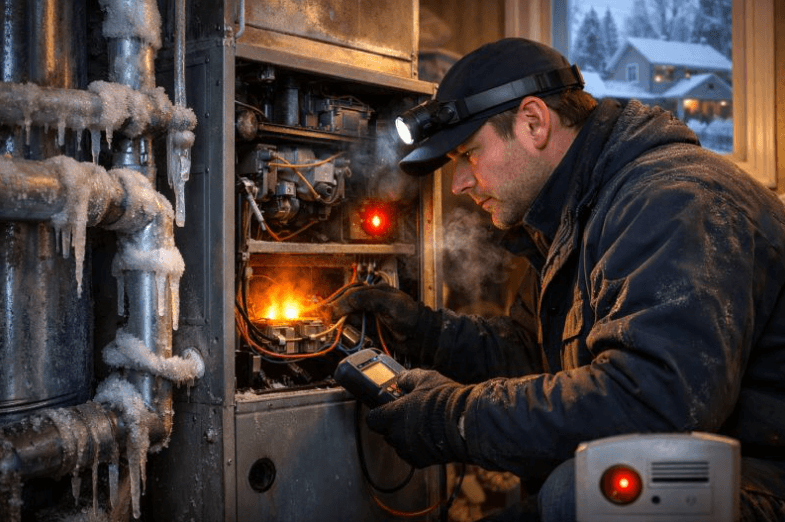
The technician starts by confirming your symptoms and checking the thermostat, circuit breaker, and fuel supply to rule out simple causes you can fix immediately. They will then inspect the furnace visually, listen for abnormal sounds, and test ignition and flame color to identify combustion or airflow issues.
Next they use tools: multimeter for wiring and control voltage, manometer for gas pressure (on gas units), and an infrared thermometer to spot heat exchanger hot spots. If filters, vents, or the condensate line are clogged, they’ll note that as a likely contributor. You should expect a short explanation of the root cause and a list of parts or tests required for a permanent repair.
Essential Safety Precautions
Technicians will shut down power and gas before working on burners, wiring, or the heat exchanger. This prevents electrical shock, gas leaks, and accidental ignition while they inspect or replace components.
They will check for carbon monoxide using a detector, and will not run the furnace if they detect unsafe CO levels or a cracked heat exchanger. If they find active gas leaks, they may leave the premises and advise you to evacuate until the utility or qualified technician makes the area safe.
You should ask about any immediate hazards they identify and whether you need temporary alternate heating or ventilation. Confirm whether they will seal off work areas to protect your home from dust and debris.
See also: Fabric Technologies Changing the Industry
Temporary Repairs and Long-Term Solutions
If a simple fix restores heat quickly, expect measures like thermostat recalibration, replacing a failed limit switch, reconnecting loose wiring, clearing a clogged condensate drain, or installing a new filter. These fixes get your home warm while the tech schedules parts or a longer service visit.
For failed major components—blown heat exchanger, cracked blower motor, or obsolete control board—the technician will present options: repair with a warranty, replace the component, or replace the entire furnace. They should provide itemized costs, estimated labor time, and the expected service lifespan of the chosen solution.
Ask for written estimates and priorities: what must be fixed now for safe operation, what can wait, and what temporary measures you should follow until permanent work is completed.