Water Heater Maintenance in Indianapolis: A Guide for Homeowners

Introduction
A reliable water heater is an important part of everyday life, providing hot water for showers, washing dishes, laundry, and other household tasks. Regular water heater maintenance in Indianapolis can help homeowners keep their systems operating efficiently and identify potential problems before they become costly repairs.
Whether your home uses a traditional tank-style water heater or a tankless system, routine maintenance can support reliable performance and help extend the equipment’s service life.
Why Water Heater Maintenance Matters
Water heaters operate frequently throughout the year, which means their components can experience wear over time. Sediment can accumulate inside tank-style units, while mineral deposits may affect heating components and water flow.
Routine maintenance gives homeowners an opportunity to inspect the system and address developing issues. It can also help maintain heating performance and reduce the likelihood of unexpected interruptions in hot-water service.
Common Water Heater Problems
Several issues can affect water heaters. One common problem is sediment accumulation inside the tank. Minerals present in water can settle at the bottom of the tank and may interfere with efficient heating.
Homeowners may also notice inconsistent water temperatures, unusual noises, discolored water, leaks, or insufficient hot water. These symptoms can have different causes, so professional inspection may be necessary to determine the appropriate solution.
For gas-powered units, problems involving burners, gas connections, or ventilation should be handled by qualified professionals.
Water Heater Inspection
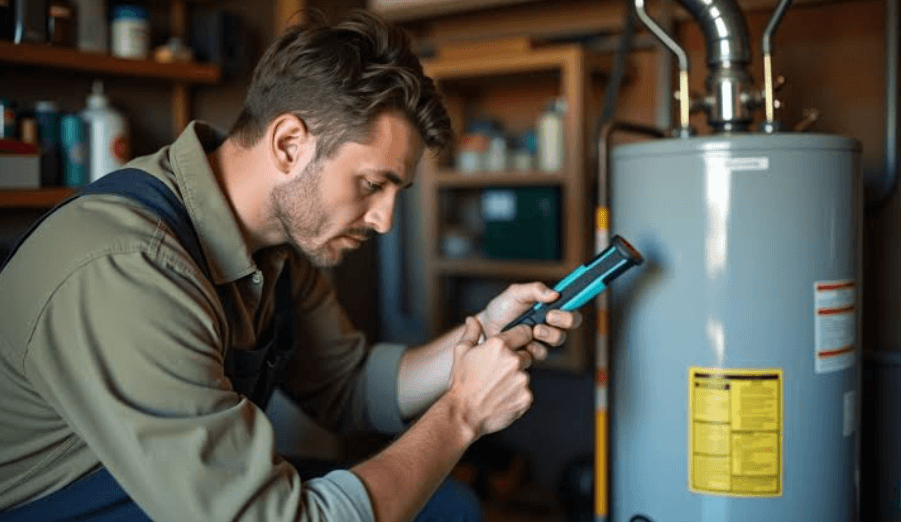
A professional maintenance visit can include an inspection of the water heater and its major components. A technician may examine connections, valves, heating elements, the tank, and other components depending on the type of system.
For traditional tank water heaters, the technician may also evaluate sediment buildup and inspect the condition of the anode rod. The anode rod is designed to help protect the tank from corrosion and may eventually require replacement.
Regular inspection can provide an opportunity to identify worn or damaged components before they cause a larger problem.
Flushing a Tank Water Heater
Flushing is a common maintenance procedure for traditional tank-style water heaters. The process involves draining water from the tank to help remove accumulated sediment.
The exact maintenance requirements depend on the water heater, water conditions, manufacturer recommendations, and the age of the equipment. Because water heaters contain hot water and may involve gas or electrical connections, homeowners should use appropriate safety precautions and consider professional service if they are unfamiliar with the procedure.
Checking Temperature Settings
Water heater temperature settings affect comfort, energy consumption, and safety. A setting that is too high can increase the risk of scalding, while an inappropriate setting may result in insufficient hot water.
A qualified technician can check the system’s temperature controls and ensure they are operating correctly. Homeowners should also follow the manufacturer’s recommendations for their particular water heater.
Tankless Water Heater Maintenance
Tankless water heaters do not store large quantities of hot water in a tank, but they still require maintenance. Mineral buildup can affect internal components and reduce system performance, particularly in areas with harder water.
Depending on the manufacturer’s recommendations and local water conditions, tankless units may require periodic descaling or other professional service.
Regular maintenance can help keep the heat exchanger and other components functioning properly.
Choosing Water Heater Maintenance in Indianapolis
When looking for water heater maintenance in Indianapolis, homeowners should consider a service provider’s experience with their specific type and brand of water heater.
It is useful to ask what the maintenance service includes and whether the technician will inspect the system for signs of corrosion, leaks, sediment buildup, or component wear.
Homeowners should also request information about any recommended repairs before authorizing additional work. Clear communication can make it easier to understand the condition of the system and plan future maintenance.
When to Call a Professional
Some water heater problems should be addressed promptly. A leaking tank, lack of hot water, unusual sounds, strong odors, repeated temperature fluctuations, or visible damage may indicate that professional inspection is needed.
Gas water heaters require particular caution because improper handling of gas connections or combustion components can create serious safety risks. Electrical water heaters can also present electrical hazards.
If you are unsure about the cause of a problem, contacting a qualified professional is generally safer than attempting a complicated repair yourself.
Benefits of Regular Maintenance
Routine water heater maintenance can offer several practical benefits. It may help identify developing problems, maintain heating performance, and reduce the risk of unexpected breakdowns.
Maintenance can also give homeowners a better understanding of their equipment’s condition. If a water heater is approaching the end of its expected service life, a technician may be able to identify signs of deterioration and help the homeowner plan for eventual replacement.
Conclusion
Regular water heater maintenance in Indianapolis can help homeowners maintain dependable hot-water service and address potential issues before they become major problems. Inspections, appropriate cleaning, component checks, and timely repairs can all contribute to the proper operation of a water heater.
Whether you have a traditional tank system or a tankless unit, following manufacturer recommendations and scheduling professional maintenance when needed can help keep your home’s hot-water system working efficiently and safely.