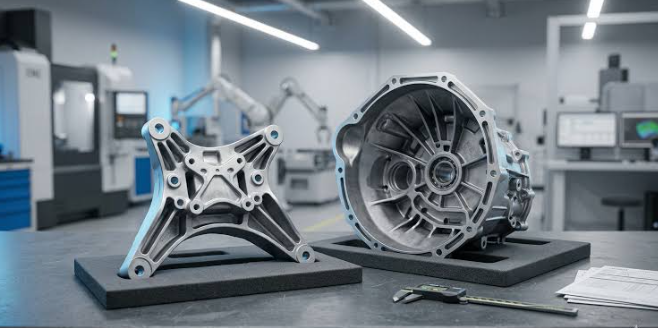
Aluminum Die Casting Service Fundamentals for Product Manufacturers

For products requiring complex geometries at high production volumes, aluminum die casting offers a manufacturing process that CNC machining alone often can’t match in terms of production efficiency. This guide covers the fundamentals of this process.
How Die Casting Works
Die casting forces molten aluminum under high pressure into a precision steel mold, or die, producing complex parts with good dimensional accuracy and surface finish directly from the casting process, often requiring minimal secondary machining.
See also: Emergency Possum Removal – 24/7 Rapid Response Wildlife Control Services
Why Aluminum Specifically Works Well for Die Casting
Aluminum’s relatively low melting point, good flow characteristics when molten, and favorable strength-to-weight ratio make it particularly well suited to die casting compared to many alternative metals.
High Pressure Versus Other Casting Approaches
High pressure die casting, which forces molten metal into the die under significant pressure, enables production of complex, thin-walled geometries at high volumes efficiently, distinguishing it from lower-pressure or gravity-fed casting alternatives.
Common Applications for Aluminum Die Casting
Automotive components, consumer electronics housings, and industrial equipment parts frequently rely on aluminum die casting given its combination of production efficiency, dimensional accuracy, and the favorable material properties aluminum offers.
Evaluating a Die Casting Service Provider
Tooling Expertise
Since die casting quality depends heavily on precision tooling, a provider’s genuine tooling design and fabrication expertise significantly affects final part quality and production consistency.
Post-Casting Finishing Capability
Many die cast parts require secondary machining, surface finishing, or coating, making a provider’s integrated finishing capability valuable for streamlined project management.
For a closer look at available aluminum die casting capabilities, aluminum die casting service offers additional technical detail worth reviewing.
Frequently Asked Questions
Why is aluminum such a common choice for die casting compared to other metals? Its favorable melting point, flow characteristics, and strength-to-weight ratio make it particularly well suited to the high-pressure die casting process.
Does die casting eliminate the need for any secondary machining? Not always; while die casting produces good dimensional accuracy directly, many parts still require secondary machining for critical features or tight-tolerance surfaces.
What industries rely most heavily on aluminum die casting? Automotive, consumer electronics, and industrial equipment industries are among the most significant users, given the process’s efficiency for complex, high-volume parts.
Final Thoughts
Aluminum die casting offers genuine production efficiency advantages for complex parts at scale. Understanding the process fundamentals and provider evaluation criteria helps manufacturers make informed decisions about when this process fits their product’s manufacturing needs.