The First Two Days Decide How the Whole Trout Week Goes

Most anglers heading north worry about the wrong part of the trip. They worry about the bush road, about the truck, about whether the fishing boat will be any good. Then they arrive, and Monday disappears. So does half of Tuesday. Five days of holiday, and two of them burned running an unfamiliar lake at random, hunting in water that might hold fish. Nobody puts that in the brochure.
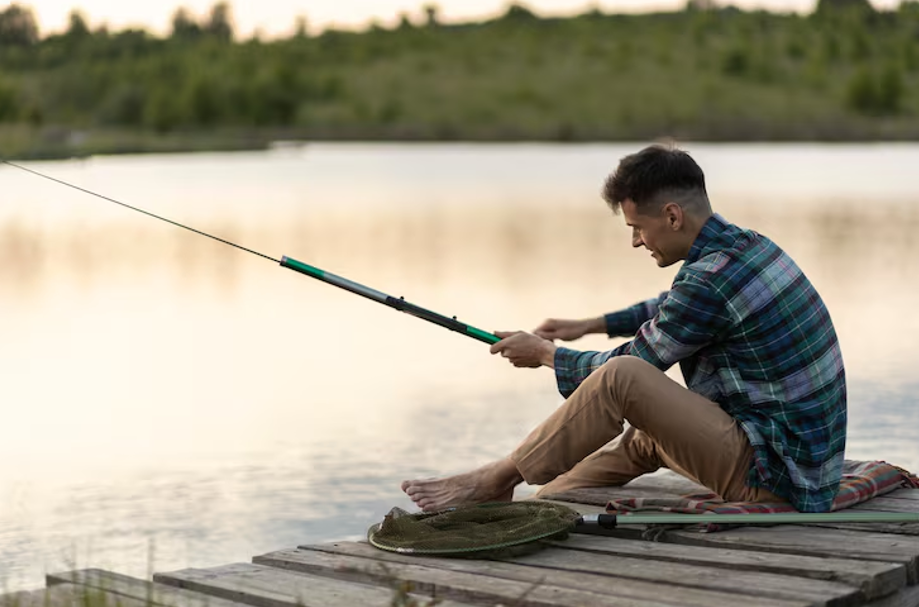
Quebec lake trout fishing rewards anglers who show up with a plan, or who show up somewhere that hands them one. Trout do not spread themselves evenly. They sit where cold water, oxygen and forage overlap, and on a lake fifteen miles long that overlap can amount to a few hundred yards of shoreline. Find it early and the week works out. Miss it, and you troll hopefully until Friday.
The question worth asking before booking, then, is probably not how many fish come out of a lake. It is how quickly a first-timer gets pointed at them.
What Good Lake Trout Water Actually Looks Like
Trout hold on structure, and structure reads better on paper than from a boat seat. A bathymetric map shows depth contours the way a topographic map shows hills, so a shoal dropping into deep water becomes obvious, and so does a point that keeps running underwater long after it vanishes from sight. Those edges hold fish through most of the season. An operator who has watched the same water for three decades can mark half a dozen of them before you ever launch.
Depth matters more as summer settles in. By late July, the lake sorts itself into layers, and trout sink into the hypolimnion, the cold bottom layer beneath the warmed surface water. That might be fifty feet down. It might be eighty. Guessing wrong by twenty feet means pulling lures through empty water all afternoon, which is a slow way to learn a lake. Local knowledge is not a sales line here. It is the whole difference between a flat day and a good one.
How Trout Move Through a Quebec Fishing Season
The pattern holds up year to year, more or less, though weather pushes it around by a week or two either way:
- Late May and June: fish sit shallow near rocky points and take casting gear
- Early July: they start sliding deeper as the surface warms
- Late July into August: downrigger and jigging depths, often fifty to eighty feet
- All season: every trout goes back in the water
That last line is not a house preference. Lake trout grow slowly in cold northern water, and a thirty-inch fish has usually been feeding for twenty years or more before anyone gets a net under it. Pull a dozen of those out and the lake takes most of a generation to replace them.
Why the Lake Still Holds Mature Fish After 36 Years
Access is the reason, and it is worth understanding before comparing camps. One lodge sits on this lake. No cottages, no public launch, no second operator, no town within sixty miles of bush road. The water gets fished by guests and by nobody else, which means pressure stays low across the whole calendar rather than just the weeks you happen to be there.
Winter matters as much as summer. The lake closes completely, so no one is standing over a hole in February hauling up stacked fish. Walleye fall under a provincial slot law that requires release of everything between 14.5 and 21 inches, enforced by Quebec rather than by camp rules, which is a meaningful distinction when goodwill is the only thing holding a policy together. Walleye, pike and trout all reproduce naturally in this system. Nothing gets stocked. The name Ogascanan comes from the native word for fish hatchery, and the lake has been earning it for a long time.
Photos of current catches include the month and year for a similar reason. Anyone can post a good fish. Dating it says what happened this season.
See also: Common Causes of Pain in Women and How Chiropractic Care May Help
What the Rest of the Week Looks Like
Fishing fills the day, but the cabin decides how well you sleep before the next one. Main Camp cabins are drive-in, with three-piece bathrooms, propane stove and fridge, wood heat for cold nights, and electric light after dark. Satellite internet works, which some guests want and others quietly resent. Outpost cabins sit farther out on the lake, reachable by boat, with hot running-water showers, and one three-cabin island setup accommodates larger groups who want the place to themselves.
Shore lunch happens on a sand beach, cooked over a fire, usually somewhere near where the morning bite happened. Families who come mid-July through mid-August swim off those same beaches while the anglers fish. Moose show up along the shoreline often enough that people stop being surprised.
Drive far enough up the bush road and the fishing gets simple again. Getting pointed at the right water on day one is what makes the rest of the week count successfully.