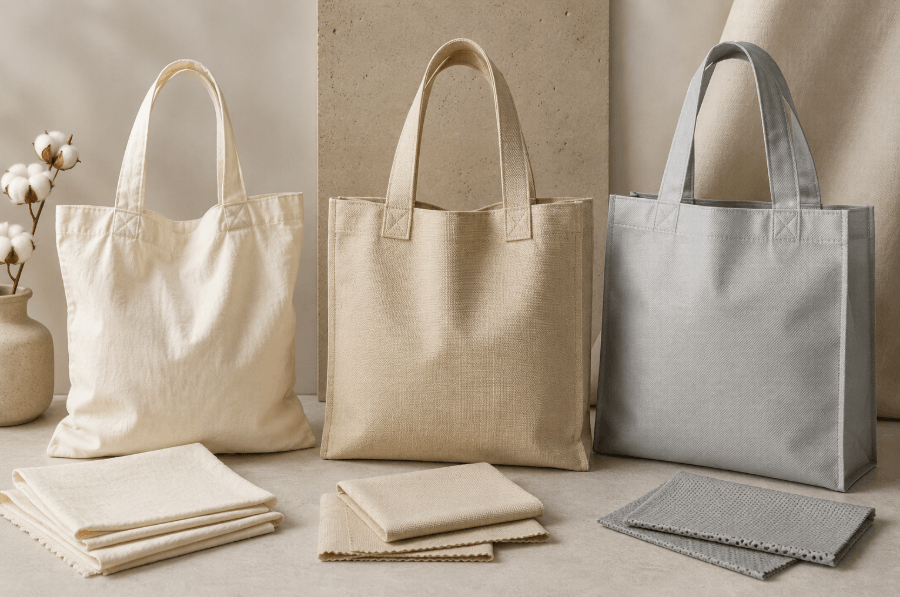
Cotton, Canvas, or Non-Woven: How to Choose the Right Tote Bag Material

Introduction
Choosing the right material for tote bags is one of the most important decisions in any branding or promotional project. While design and color often get most of the attention, the material itself plays a far more important role in determining how the bag performs in real use. Cotton, canvas, and non-woven fabrics each have different strengths, and selecting the right one depends on usage scenario, budget, and brand positioning.
A well-matched material not only improves functionality but also affects how customers perceive the brand behind the product. A bag that feels sturdy and comfortable is more likely to be reused, which increases long-term visibility.
Understanding the Role of Material in Branding
Material is the first physical impression a customer experiences when they receive a bag. Even before noticing the logo or design, they can immediately feel the difference between soft cotton, structured canvas, or lightweight non-woven fabric.
This tactile experience influences how customers evaluate quality. For example, a structured bag often feels more premium, while a lightweight bag feels more practical and disposable depending on the context. That is why many businesses carefully evaluate Custom Tote Bags based not only on appearance but also on how the material aligns with their brand identity.
Cotton Bags: Simple, Versatile, and Everyday-Friendly
Cotton bags are one of the most commonly used options in promotional and retail packaging. They are soft, flexible, and easy to print on, making them ideal for simple branding designs.
Cotton works particularly well for:
- Retail shopping
- Educational events
- Light promotional campaigns
- Daily casual use
Because cotton feels natural and familiar, customers are more likely to accept and reuse it in everyday life. However, it may not be ideal for heavy-duty usage compared to thicker materials.
Canvas Bags: Durable and Structured for Long-Term Use
Canvas is thicker and more durable than standard cotton. It provides better structure and can carry heavier loads without losing shape. This makes it a strong choice for premium branding or long-term reusable products.
Many buyers refer to Canvas Bag Weight Guide information when selecting canvas thickness, especially when durability is a key requirement. Heavier canvas often creates a more premium feel, while lighter canvas provides flexibility and lower cost.
Canvas is commonly used in:
- Corporate gifting
- Premium retail packaging
- Long-term reusable shopping bags
- High-end promotional campaigns
See also: How TM44 Inspections Help Businesses Understand Air Conditioning Performance
Non-Woven Bags: Lightweight and Cost-Efficient for Mass Distribution
Non-woven bags are typically used for large-scale distribution because they are lightweight and cost-effective. They are ideal when businesses need high volume at low cost, such as trade shows or public events.
However, while they are efficient for distribution, they may not always be reused as frequently as cotton or canvas bags. This makes them more suitable for short-term exposure campaigns rather than long-term branding strategies.
For businesses comparing materials, guides such as Non Woven vs Cotton Tote Bags are often used to evaluate whether the priority is cost efficiency or long-term usability.
Conclusion
Cotton, canvas, and non-woven materials each serve different branding purposes. The right choice depends on how the bag will be used, how long it needs to last, and what impression the brand wants to create. When material aligns with campaign goals, even a simple tote bag can become an effective and long-lasting branding tool.